Blog
Throwing a cast net looks simple from the outside, but getting a perfect spread takes more than just tossing it into the water. The way the net opens in the air determines how much bait you cover and how effective each throw will be. A tight, uneven spread leaves gaps. A clean, full circle increases your chances of loading the livewell quickly. The difference comes down to setup, loading, rotation, and timing all working together.
At Fitec, we have been building cast nets since 1984, serving both recreational anglers and commercial fleets who rely on their gear daily. Our nets are designed for proper weight distribution, reinforced durability, and consistent performance in real fishing conditions. From inshore flats to freshwater lakes and coastal docks, we focus on dependable gear that opens clean and sinks efficiently.
This article breaks down the best way to throw a cast net for a perfect spread — including proper loading, throwing technique, release timing, and practical tips to improve consistency on the water.
Key Takeaways:
- Proper Setup Matters: Balanced loading and correct stance directly impact your ability to achieve a full, even spread.
- Technique Over Strength: Smooth rotation, accurate release timing, and wrist control produce better results than force alone.
- Practice Builds Consistency: Repetition in real fishing conditions improves timing, accuracy, and overall cast net performance.
Why the Best Way to Throw a Cast Net Starts with Proper Setup
The best way to throw a cast net begins before the motion itself. Proper setup determines whether your net opens into a full circle or collapses midair. Start by checking for tangles. The lead line should hang evenly, and the net should load cleanly in your hands. If the weights are uneven or twisted, you will not get a perfect cast net spread. Before your next session, it also helps to understand cast net features and how to choose the right cast net so your setup matches your target bait and water conditions.
Your stance should be balanced and stable. Face your target with enough room to rotate smoothly. Control matters more than force. A clean setup allows the net’s weight distribution to do the work — and most failed throws aren’t caused by poor strength or timing. They come from rushed preparation. When the net is properly loaded and positioned, achieving a full spread becomes much easier and more consistent.
How to Choose the Right Net and Understand Cast Net Features
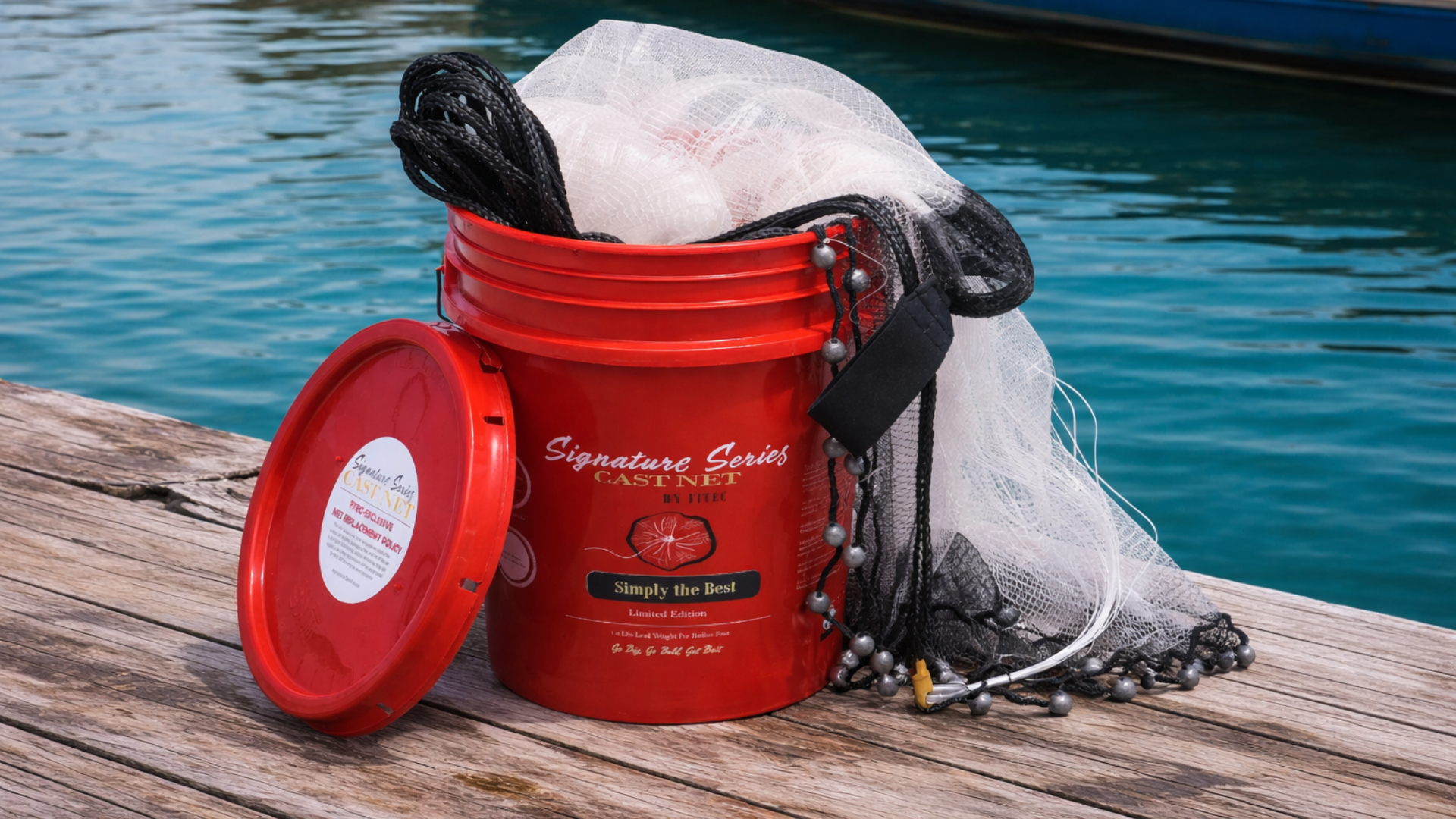
The right net makes a full spread easier to achieve. Size, mesh, and weight all affect how the net opens and sinks.
Matching Mesh Size to Your Target Bait
Smaller mesh works best for small bait and slower sink rates. Larger mesh sinks faster and suits larger bait species. Matching the correct mesh to your target improves efficiency and overall performance.
Understanding Weight Distribution and Net Design
Weight per radius influences how aggressively the net opens and how quickly it sinks. Evenly distributed lead supports a cleaner, more reliable spread. A well-balanced net works with your technique, helping you achieve consistent results.
Cast Net Loading Method: Setting Up for a Perfect Cast Net Spread
A proper cast net loading method sets up the throw before it begins. Even small imbalances can prevent a clean, full opening. If you are unsure which net to start with, reviewing how to choose the right cast net before loading up can save you time on the water.
Organizing the Lead Line and Panels
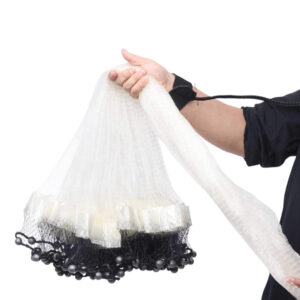
Secure the handline and let the net hang freely to remove twists. Gather the lead line evenly so the weight is balanced in your hands. Uneven panels or crossed mesh reduce your ability to achieve a perfect cast net spread.
Positioning the Net for a Clean Rotation
Hold the lead line in controlled sections, keeping the net balanced between both hands. Your body should drive the motion, not just your arm. Proper loading here is what allows smooth rotation and a consistent full spread on the water.
Step-by-Step Cast Net Throwing Technique for a Full Spread
A clean cast net throwing technique depends on smooth rotation and proper release. Control matters more than force at every stage.
Body Rotation and Controlled Motion
Start with a balanced stance facing your target. Rotate your hips and shoulders together, letting your body generate momentum while your arm guides the net. Keep the motion smooth and level to help the lead line spread evenly.
Creating Separation for a Full Spread Cast Net
Release at shoulder height as your body squares to the target. The net should travel in a smooth arc, allowing the weights to separate and form a circle before hitting the water. Clean rotation and steady timing are what produce a reliable full spread cast after cast.
Pancake Throw Cast Net Method Explained
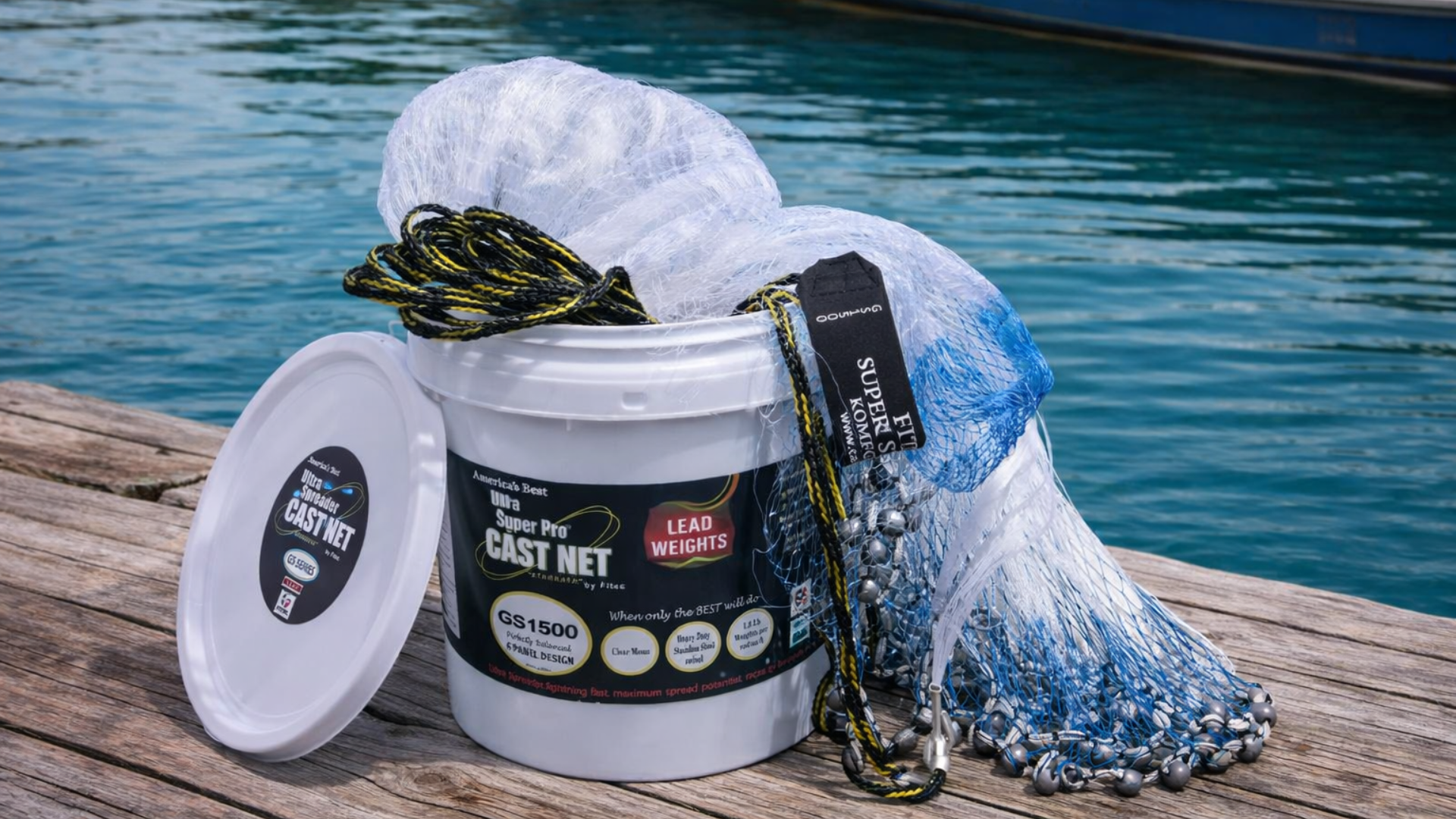
The pancake throw is one of the most effective ways to achieve a wide, even opening. It works because it creates strong rotation and reliable separation of the lead line. When done correctly, it helps anglers land a consistent, perfect spread every time.
How to Perform the Pancake Throw
- Secure the handline firmly around your wrist.
- Gather the net at the horn and allow it to hang freely to remove twists.
- Load the lead line evenly, dividing it cleanly between your hands.
- Hold a section of the lead line in your throwing hand while the remaining portion rests in your off hand.
- Rotate your hips and shoulders together as you begin the motion.
- Sweep the net outward in a circular path rather than pushing it straight forward.
- Release smoothly at shoulder height, allowing the net to flatten in the air.
That circular motion is what creates the spinning effect that gives this method its name. The lead line spreads outward evenly, helping you achieve a full spread with strong coverage. The pancake method works well in open areas such as flats, shorelines, and around bait schools. With repetition, it becomes a dependable part of your cast net toolkit and produces consistent results in real conditions.
Cast Net Release Timing and Cast Net Wrist Flick Technique
Release timing is critical for a perfect spread. Release too early, and the net rises without fully opening. Release too late, and the lead line drops before it separates. The ideal moment is at the peak of rotation — right when your shoulders square to the target and the net moves outward in a smooth arc.
The wrist flick adds the final layer of control. A quick, precise snap at release helps the weights spread evenly without overpowering the net. Together, proper body mechanics, clean release timing, and a subtle wrist flick are what separate a good throw from a great one — and what consistently produce a full spread in real fishing conditions.
Advanced Cast Net Technique and How Pros Throw Cast Nets
At the advanced level, cast net technique centers on efficiency, accuracy, and consistency. Experienced anglers focus on balance, clean loading, and controlled rotation rather than force. Their movements are deliberate and repeatable, allowing the net to open smoothly and land with a full, even spread.
What separates pros comes down to preparation and adjustment. They inspect the lead line before every throw to prevent uneven openings. They shift their stance based on wind direction and current speed. Instead of muscling the net with their arm, they let their hips and shoulders drive the motion, creating better separation and cleaner rotation. In shallow water, they use a lower, flatter trajectory for precision. In deeper water or stronger current, they increase rotation speed and fine-tune release timing to improve sink rate and coverage.
The technique itself is not complex. It gets refined through repetition and an awareness of conditions. Controlled, deliberate motion paired with small adjustments leads to a more dependable and consistent full spread.
Cast Net Throw Tips to Help You Get a Full Spread Every Time
Consistent results come from repeating small details correctly. Even solid technique will fall short if the fundamentals get skipped. Keep the net clean and untangled before each cast — twisted mesh or crossed lead weights will limit your spread no matter how good your motion is. Stay balanced and let your hips and shoulders drive the throw instead of just your arm.
Adjust for wind and current by lowering your trajectory or leading moving bait. Practice your wrist flick alongside smooth rotation and clean release timing. Put in the repetitions in real conditions, and a perfect spread stops feeling like a lucky throw — it becomes the expected outcome.
Final Thoughts
The best way to throw a cast net comes down to preparation, proper loading, controlled rotation, and clean release timing. Strength plays a role, but consistency comes from balance and repetition. When your net is matched to your target bait and your technique stays smooth, achieving a perfect spread becomes routine. Focus on clean mechanics, practice in real conditions, and refine small details like your wrist flick and release point. Over time, a full, clean spread will feel natural and efficient every time you step to the water. If you are ready to put your technique to use in the field, check out our guide to springtime fishing in the Everglades for real-world conditions where a clean spread makes all the difference.
Frequently Asked Questions About The Best Way to Throw a Cast Net
What is the best way to throw a cast net for beginners?
Beginners should focus on balance and smooth rotation rather than power. Start with a lighter net, practice clean loading, and concentrate on controlled body movement. Keeping the motion simple helps build a consistent technique early.
How long does it take to learn how to get a full spread cast net?
Most anglers see improvement within a few practice sessions. Consistency usually develops after repeated throws in real conditions. Muscle memory plays a big role in making a reliable motion feel natural.
Is a heavier net better for a perfect cast net spread?
Heavier nets can open more aggressively and sink faster, but they require better control. For many anglers, a moderate weight offers the best balance between spread and manageability.
Does water depth affect cast net throwing technique?
Yes. In shallow water, accuracy and a flatter trajectory matter more. In deeper water, quicker rotation and a faster sink rate become more important to reach bait before it moves.
Can wind interfere with the best way to throw a cast net?
Wind can alter the net’s arc and reduce spread. Adjusting your release angle and throwing slightly lower can help maintain control in breezy conditions.
What size cast net works best for dock and pier fishing?
A medium radius net is often easier to manage in tight spaces. Larger nets cover more water but require more clearance and a more refined technique.
How do pros throw cast nets accurately at moving bait?
Experienced anglers lead the bait slightly rather than casting directly at it. They also read water movement and anticipate where the bait will settle before the net sinks.
Does net material affect performance?
Yes. A softer, well-balanced mesh can open more smoothly and sink efficiently. Reinforced stitching and durable materials help maintain shape over repeated use.
How often should you practice cast net throw tips?
Short, consistent practice sessions are more effective than occasional long sessions. Regular repetition improves timing and coordination over time.
What is the most common reason a cast net fails to open fully?
Uneven loading and poor release timing are the most frequent causes. A good throw can still fall short if the net isn’t properly balanced before the rotation begins.
-
-
Select options This product has multiple variants. The options may be chosen on the product page

- Signature Series, Tape Nets
Signature Series Deep Water Tape Net
- Price range: $165.99 through $221.49
-
-
-
-
-
-
-
-
Select options This product has multiple variants. The options may be chosen on the product page
- SS Series, SS-1000 Deep Water Tape, Tape Nets
SS1000 Deep Water Tape Net
- Price range: $57.87 through $97.00
-
-
-
-
-
-