Blog
Finding the right cast net can make a noticeable difference during a bait run. A dependable net opens cleanly, sinks quickly, and holds up through repeated throws. Most cast nets look similar in a product listing — same general shape, similar price points, comparable descriptions. The differences that actually matter show up on the water, after the net has been thrown a few hundred times in real conditions.
At Fitec, we focus on gear that works in real fishing conditions. Our experience centers on designing and supplying cast nets built for balance, durability, and dependable spreads. From inshore saltwater anglers to freshwater bait fishermen, our goal is to provide nets that help anglers gather bait efficiently and spend more time fishing. Our designs are built around practical performance, proper weight distribution, and materials that hold up over time.
This piece breaks down what actually separates reliable cast nets from the rest — and what anglers should look for when the options all seem to blur together.
Key Takeaways:
- Performance Factors: Reliable cast net brands focus on strong mesh, balanced lead weights, and reinforced lines for consistent spreads and better bait capture.
- Brand Differences: Top cast net manufacturers vary in construction style, materials, and design features that affect durability and throwing performance.
- Buying Insight: Comparing cast net reviews and construction features helps anglers choose a net that performs well and lasts through repeated use.
Cast Net Brand Comparison: What Makes a Reliable Cast Net?
Walk into any tackle shop or scroll through any online listing and cast nets all start to look the same. The specs read similarly. The price points overlap. But a net that opens unevenly, tangles on the retrieve, or loses its shape after a season of regular throws costs you time and bait on every outing. Reliability comes from strong mesh, reinforced braille lines, balanced lead weights, and hardware built for the environment you are fishing in. Those details are not visible in a product photo — which is exactly why they get overlooked and exactly why they matter.
What Separates a Truly Reliable Cast Net From the Rest
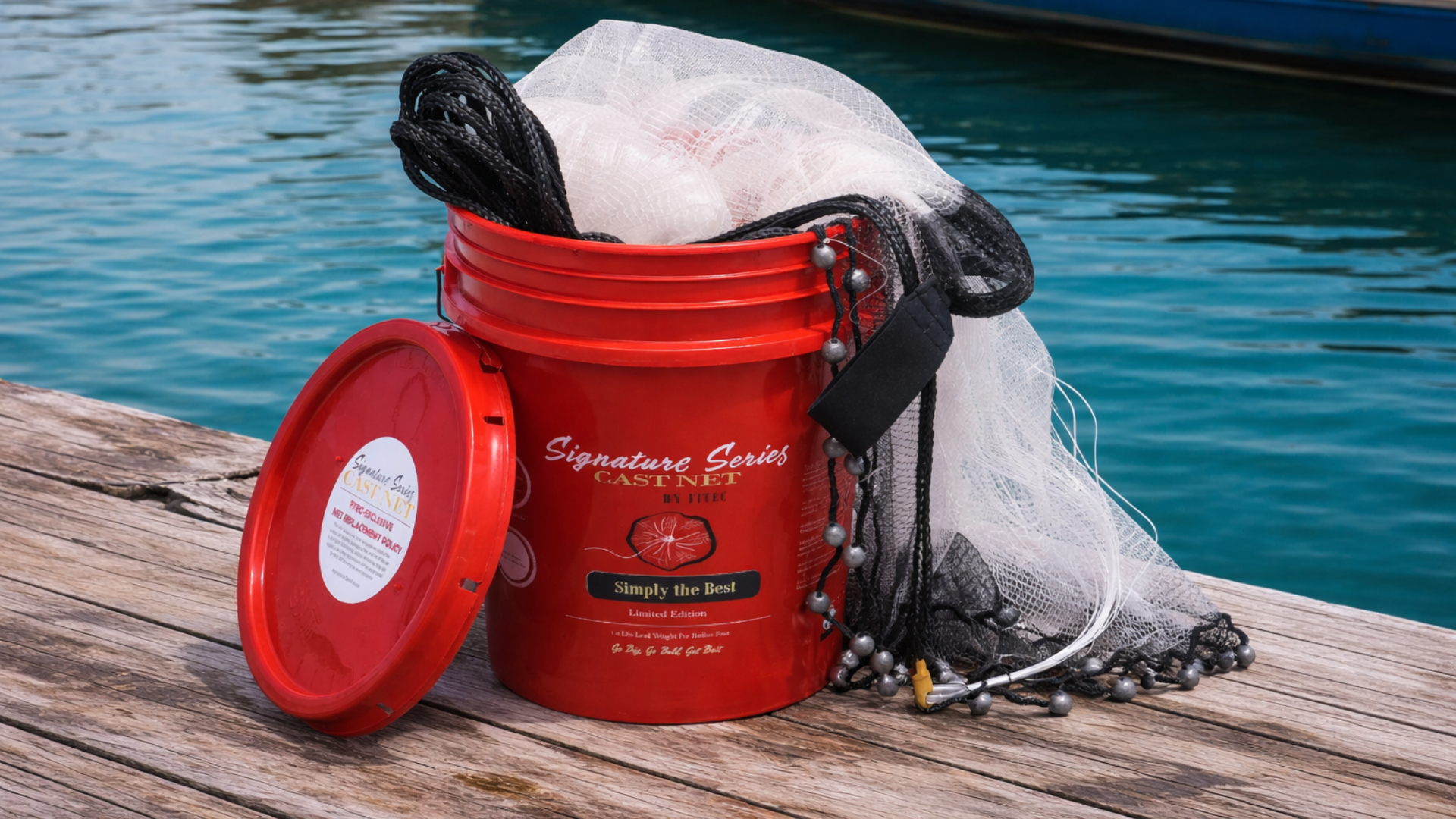
Not all cast nets are built the same, and the differences show up fast on the water. The details that prevent problems — weight distribution, mesh construction, braille line reinforcement, and hardware quality — are where Fitec has focused since 1984.
Most cast nets in this space look similar in a product listing. The real separation comes from how they are actually built. Fitec nets are designed with evenly distributed lead, reinforced braille lines, and a stainless steel swivel — the only metal component on the net and the one most vulnerable to failure in a marine environment. That level of construction attention is what produces a net that opens the same way on throw fifty as it did on throw one. Visit our cast net features page for a full breakdown of the construction details that matter most.
Why Consistent Manufacturing Matters
For anglers who rely on live bait, a net that performs inconsistently is not just frustrating — it costs fish. Nets built with careful quality control open properly and maintain their performance after repeated use. Tangled mesh, uneven spreads, and premature wear are not bad luck. They are the result of shortcuts in construction. Choosing a manufacturer known for reliable build quality is the most direct way to avoid those problems.
Fitec Cast Net: Design, Durability, and Real-World Performance
Fitec is widely recognized among anglers for producing cast nets built with practical design and durable construction; learn more on our about Fitec cast nets page. The focus has always been on nets that perform in real conditions — not nets that look good until the third trip.
Fitec Cast Net Design and Features
A Fitec cast net is designed with proper weight distribution and strong materials. Reinforced braille lines, durable mesh, and evenly spaced lead weights help the net spread consistently during a throw. The stainless steel swivel — the only metal component on the net — is designed specifically for marine use, resisting the corrosion and seizing that lesser hardware is prone to after regular saltwater exposure. It is a small detail that makes a meaningful difference for anglers who fish in coastal environments. The range of mesh sizes and configurations available across cast nets by Fitec makes it easier to target different bait species in both freshwater and saltwater environments.
Durability and On-the-Water Performance
Durability is one of the main reasons anglers continue using Fitec nets. Strong stitching and reinforced components help the net withstand repeated throws without losing shape. A well-balanced net that opens fully and sinks properly turns a bait run from a chore into part of the routine.
Lee Fisher Cast Net: A Look at Construction and Reliability
Lee Fisher is a well-known name in the cast net market, producing nets used by both recreational anglers and commercial bait collectors. The brand has a long presence in the category and offers a range of sizes and mesh options.
Lee Fisher Cast Net Construction
A Lee Fisher cast net typically features strong monofilament mesh and reinforced braille lines. Balanced lead lines support wide, consistent spreads when the net is cast. For anglers comparing options, it is worth looking closely at hardware quality and lead distribution across specific models, as construction details can vary.
Reliability for Regular Bait Fishing
Lee Fisher nets are a common reference point for anglers evaluating the mid-range of the market. Nets that hold their shape and maintain balanced weighting tend to perform better over time. As with any brand, performance ultimately comes down to how well the specific model you choose is built — and whether those construction details match the conditions you are fishing.
Betts Cast Net: Performance and Reputation Among Anglers
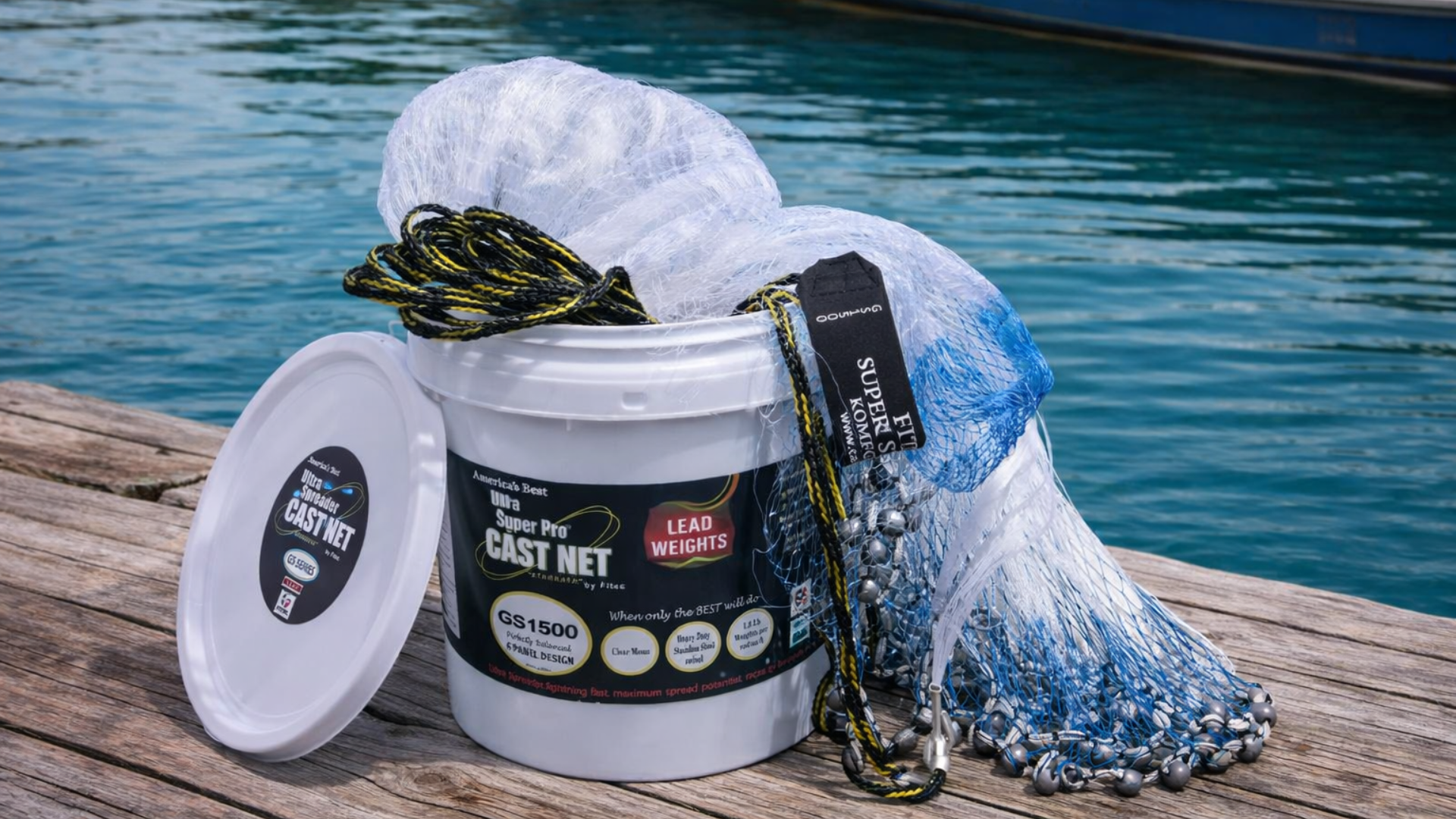
Betts has been producing cast nets for decades and remains a recognizable name among bait fishermen. Wide availability and a long market presence have made Betts a common entry point, particularly for beginners and casual anglers.
Key Features of Betts Cast Nets
- Strong monofilament mesh designed for repeated throws
- Lead lines that help the net sink quickly over bait schools
- Multiple mesh sizes for targeting different bait species
- A range of net sizes suitable for shoreline, dock, and boat fishing
- Options designed for both entry-level and experienced anglers
How Betts Nets Perform on the Water
- Nets are generally easy to throw, making them popular with beginners
- Wide availability makes replacements or upgrades easy to find
- Performance varies by model and mesh type, so reviewing specs before purchasing is worthwhile
Betts nets are worth understanding in context: they serve a purpose for casual and occasional anglers, but fishermen who throw frequently or fish in demanding conditions often find themselves looking for tighter construction and more consistent sink performance as their experience grows.
American Made Cast Nets and Why Manufacturing Quality Matters
American made cast nets are often recognized for their consistent construction and material quality. Manufacturers that produce nets domestically typically focus on durable mesh, reinforced stitching, and balanced lead lines that support reliable spreads during each throw. For anglers who depend on live bait, where a net is made matters less than how it is made — but domestic production is often associated with stricter quality oversight and more consistent materials.
The bottom line is construction. A well-built net maintains its shape, sinks evenly, and holds up over time. Uneven openings, tangled braille lines, and premature wear are symptoms of a manufacturing process that cut corners — regardless of where the net was made.
Most Durable Cast Net Features Serious Anglers Look For
Anglers who fish hard and fish often develop a short list of what they will not compromise on. Strong monofilament mesh that resists wear from regular use. Reinforced braille lines and secure stitching that prevent tearing and tangling. Balanced lead weighting that allows the net to open evenly and sink properly over bait. And on saltwater nets specifically, a stainless steel swivel — because the swivel is the only metal component on the net, and it is the first thing to fail if it is not built for a marine environment.
These are not premium features. They are the baseline for a net that performs reliably. Nets built with strong materials and proper weight distribution perform more consistently and hold up across many fishing trips.
Cast Net Brand Ranking Based on Durability and Cast Net Reviews
Cast net reviews are useful, but they are most valuable when the reviewer is fishing the same conditions you are. A net that works well for occasional dock fishing may not hold up to daily bait runs in tidal current. Brand reputation matters, but construction specifics matter more.
The brands that consistently earn strong reviews share a common thread — durable mesh, reinforced braille lines, balanced lead weights, and hardware that does not fail after a few seasons of regular use. Our guide on how do I choose the right cast net helps narrow down the best option for your specific situation. The goal is not to find the most recognized name. It is to find the net that performs reliably every time it hits the water.
Final Thoughts
There is no shortage of cast nets on the market. The challenge is not finding one — it is knowing which construction details actually matter and which brands deliver on them consistently. Nets built with strong materials, balanced weight distribution, stainless steel hardware, and dependable construction tend to hold up better through repeated use and real fishing conditions. Comparing features rather than brand names, and reading reviews from anglers who fish similarly to you, will get you closer to the right answer than price alone. Browse all available options in our product catalog and use our cast net features page to compare build details side by side.
Frequently Asked Questions About Comparing Cast Net Brands
What should anglers look for in the best cast net brands?
Focus on construction specifics rather than brand recognition. Durable mesh, balanced lead lines, reinforced braille lines, and quality hardware — particularly a stainless steel swivel on saltwater nets — are the details that determine how a net performs and how long it lasts.
Are expensive cast nets always better?
Not always. A higher price does not guarantee better construction. A well-built mid-range net with proper weight balance and quality materials will outperform a more expensive net that cuts corners on those fundamentals.
How long does a high-quality cast net usually last?
A high-quality cast net can last several seasons if it is used and maintained properly. Rinsing the net after saltwater use and storing it dry can help extend its lifespan.
What mesh size should I choose for bait fishing?
Mesh size depends on the bait species you want to catch. Smaller mesh works well for small bait like minnows or glass minnows, while larger mesh is often used for bait like mullet or shad.
Do beginners need a specific type of cast net?
Beginners often benefit from a net that has a moderate weight and a manageable size. Nets that are easier to control help new anglers learn proper throwing technique without becoming overwhelmed.
Are heavier cast nets better for catching bait?
Heavier nets sink faster, which can help trap fast-moving bait. However, heavier nets can also be harder to throw for some anglers. The right balance depends on experience level and fishing conditions.
Can cast nets be used in both freshwater and saltwater?
Yes. Many cast nets are designed for use in both environments. In saltwater, hardware quality becomes especially important — the swivel is the only metal component on the net and the most vulnerable point. A stainless steel swivel is the standard to look for.
What size cast net is best for most anglers?
Many recreational anglers prefer nets between six and eight feet in radius. These sizes provide good coverage while remaining manageable to throw from docks, shorelines, or boats.
How do anglers prevent cast nets from tangling?
Proper storage and careful handling help reduce tangles. Hanging the net to dry and keeping the braille lines organized can prevent knots and twisting during the next use.
Are commercial grade cast net brands different from recreational ones?
Commercial grade cast net brands often use heavier materials and stronger construction because they are designed for frequent, high-volume use. Recreational nets are typically lighter and easier to handle for casual anglers. The construction principles that matter — weight balance, mesh quality, hardware durability — apply at both levels.
-
-
Select options This product has multiple variants. The options may be chosen on the product page

- Signature Series, Tape Nets
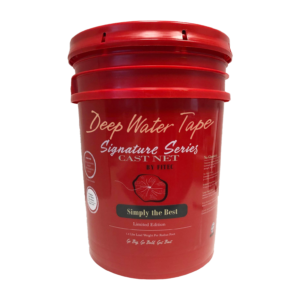
Signature Series Deep Water Tape Net- Black Bucket
- Price range: $197.99 through $221.49
-
-
-
-
-
-
-
-
Select options This product has multiple variants. The options may be chosen on the product page
- SS Series, SS-1000 Deep Water Tape, Tape Nets
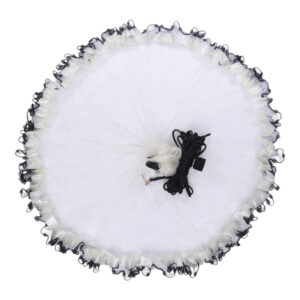
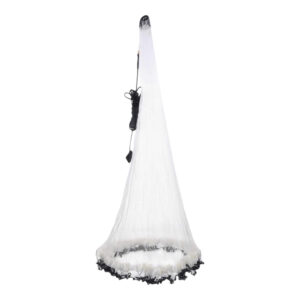
SS1000 Deep Water Tape Net
- Price range: $57.87 through $97.00
-
-
-
-
-
-